
Diabetes Test PackagesVitamin Profile TestFood Intolerance TestAarogyam Couple Offer

thyrocare aarogyam
  • Home
  • Blogs
  • Blocked arteries : Signs, risk factors and preventive measures
Blocked arteries : Signs, risk factors and preventive measures

Blocked arteries : Signs, risk factors and preventive measures

Posted By Suborna Fermi Posted on Jun 11, 2026

Introduction

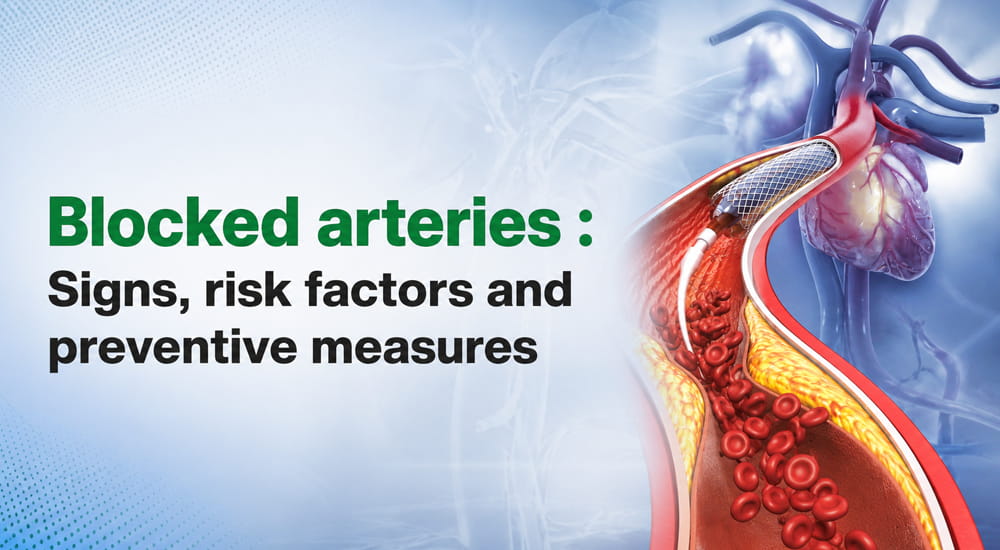
When the arteries get blocked, it hampers the blood flow. Arteries mainly get blocked because of plaque buildup. Plaque consists of fat, cholesterol, fibrin, cellular waste products, calcium, etc. The plaque buildup takes place inside the walls of the arteries. When the arteries get blocked by the plaque, blood flow to the whole body gets hampered. Also, the flow of oxygen all over the body also gets significantly compromised because of blocked arteries, which eventually leads to serious health issues.

The plaque buildup turns your arteries narrower and they become stiff, which reduces flow of oxygen and essential nutrients to the organs. When the heart struggles more to pump blood, symptoms like chest pain may start occurring. Let’s talk more about the warning signs of blocked arteries.

What are the common warning signs of blocked arteries?

Some common signs of blocked arteries include

  • Shortness of breath
  • Chest pain
  • Feeling of pressure and tightness in the chest
  • unexplained fatigue
  • Lightheadedness and dizziness
  • Heart palpitations

Apart from these, there are some more symptoms that are mentioned below.

  • If the arteries in the brain are blocked, then there will be speech problems, sudden numbness, dizziness, vision problems, severe headache, etc.
  • If the arteries in the legs are blocked, then it will cause pain while walking, sores that are not healing easily, burning in the toes and feet, etc.
  • If the arteries in the neck are blocked, then it will cause symptoms like slurred speech, vision loss, temporary weakness, etc.

What are the risk factors for blocked arteries

  • Family history of heart diseases
  • Hypertension
  • Lack of exercise
  • Elevated cholesterol levels
  • Family history of heart issues
  • Age and diet

What are the preventive measures for blocked arteries?

  • Prepare a diet plan for yourself that includes fruits, vegetables and whole grains.
  • Keep an eye on the cholesterol levels of your body through regular tests.
  • Limit the consumption of saturated fats as much as possible.
  • Minimum 150 minutes of physical activity every day is also recommended.
  • Try to manage stress through relaxation techniques with proper guidance from experts.

The bottom line

Blocked arteries cause issues that may not take much time to turn into a medical emergency. The most important thing to do is to keep your cholesterol levels in check as high cholesterol levels contribute to the plaque buildup, which is the prime reason behind artery blockage. You may consider having a consultation with a medical expert to fetch more information in this regard.